Drain Cleaning or Sewer Repair?
If your sink, tub, or toilet is slow to drain or backing up, deciding between a local drain cleaning and a full sewer repair can feel urgent and confusing. This article explains the difference between drain cleaning and sewer repair, lays out symptom-based triage so you can self-assess severity, and maps the diagnostic tools professionals use—camera inspection, snaking, and hydro jetting—to produce accurate recommendations. You will learn the signs that indicate a localized fixture clog versus a main sewer line failure, when diagnostics like a sewer camera are warranted, and how repair options (trenchless relining versus excavation) trade off cost and disruption. The guide also includes practical lists, comparison tables of diagnostic tools and repair methods, transparent cost drivers, and clear next steps for scheduling service or requesting a guaranteed quote. By the end, Warren homeowners will know how to triage a problem, what to expect from professional diagnostics, and when to contact a licensed provider for emergency response or an on-site estimate.
What Are the Differences Between Drain Cleaning and Sewer Repair?
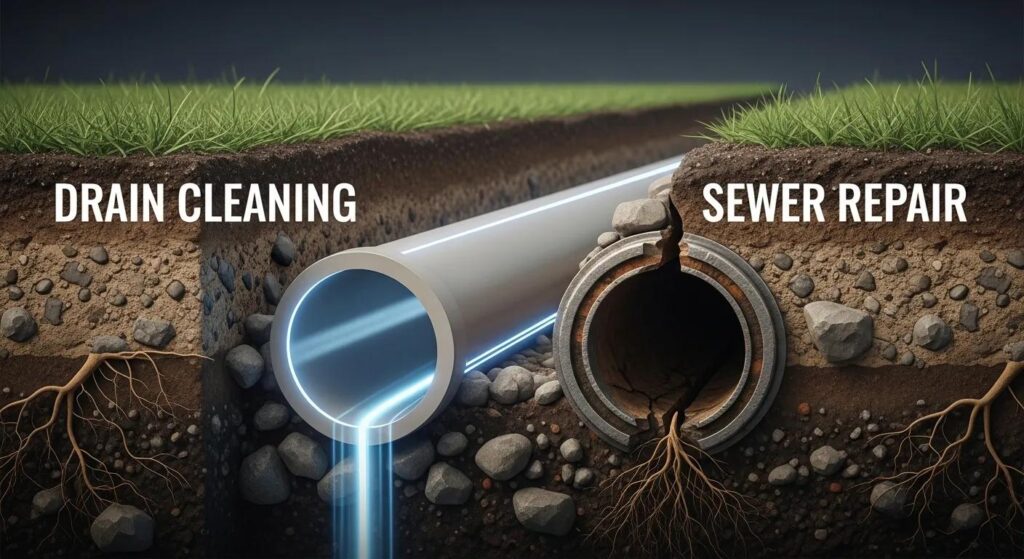
Drain cleaning addresses blockages inside a local drain or fixture line using mechanical or high-pressure water methods to restore flow quickly. The mechanism is targeted removal of an obstruction—hair, grease, soap, or small roots—that is narrowing or stopping flow, and the benefit is fast restoration with minimal disruption to landscaping or pavement. In contrast, sewer repair involves fixing damage to the main sewer line—cracks, collapse, large root intrusion, or offsets—where the mechanism can require relining or replacement, and the benefit is a long-term fix that eliminates recurrent backups. Understanding this distinction helps homeowners choose the correct response: cleaning for a localized clog, repair for structural failures that affect multiple fixtures.
Before detailing symptoms and tools, consider the primary practical differences in scope, invasiveness, and urgency:
- Local scope vs system scope: Drain cleaning fixes individual fixtures; sewer repair targets the main sewer line affecting the home.
- Non-invasive vs potentially invasive: Snaking or hydro jetting is non-invasive; excavation or full replacement can be disruptive.
- Short-term relief vs long-term solution: Cleaning often restores flow immediately, while repair prevents recurring failures and health risks.
These comparisons set the stage for symptom-based triage so you can decide when immediate cleaning may suffice and when diagnostics for sewer repair are necessary.
What Is Drain Cleaning and When Is It Needed?
Drain cleaning is the professional process of clearing obstructions from interior plumbing or lateral lines using tools such as drain snakes and hydro jetting, which remove hair, grease, soap scum, and small root intrusions. The mechanism for snaking is mechanical breakup or removal of the obstruction, while hydro jetting uses high-pressure water to scour pipe walls and flush debris, delivering a more thorough cleaning that can extend the interval before recurrence. Typical benefits include restored flow within hours, reduced odors, and prevention of minor backups becoming larger issues, making professional cleaning a cost-effective first step for single-fixture slow drains. If DIY measures fail, repeated clogs occur, or snaking only provides temporary relief, a professional assessment with camera inspection is the appropriate next step to confirm whether deeper sewer issues exist.
When deciding to call a pro, remember that professional cleaning also reduces the risk of pushing clogs deeper into the system and allows experts to document pipe condition for future planning.
What Is Sewer Repair and When Should It Be Considered?
Sewer repair addresses structural failures in the main sewer line—cracks, root intrusion, corrosion, bellied or collapsed pipe sections, or joint separations—that compromise flow and create health hazards if left untreated. The mechanism for repair varies by method: trenchless relining creates a new pipe layer inside the existing line, pipe bursting replaces the line while minimizing surface disruption, and excavation replaces a severely damaged section when trenchless methods can’t be applied. The primary benefit of repair is a durable, long-term restoration of the sewer system that prevents recurring backups, reduces contamination risk, and protects property value; this is essential when multiple fixtures are affected or when inspections reveal structural damage. Homeowners should consider sewer repair when camera inspection confirms pipe failure, when repeated cleaning doesn’t eliminate backups, or when external signs indicate ground-level problems that cleaning cannot fix.
Prompt repair planning often reduces total cost and scope by avoiding repeated emergency call-outs and progressive pipe failure that can necessitate larger replacements.
How Can You Tell If You Have a Clogged Drain or a Sewer Line Problem?
A quick diagnostic triage helps determine whether the issue is confined to a single fixture or indicates a main sewer line failure; the defining difference is distribution of symptoms across the home and presence of external signs. Localized clogs typically present as one slow or backing fixture, often caused by hair, grease, or debris, and they usually respond to snaking or targeted cleaning. Sewer line problems commonly show multiple fixtures backing up, sewage odors in the yard, unusually lush patches of grass where leaking sewage fertilizes soil, or sinkholes and repeated clogs despite cleaning; these signs point to systemic failure requiring camera inspection and possible sewer repair. Use the following checklist to triage safely before scheduling professional diagnostics.
The checklist below helps homeowners prioritize immediate actions and know when to call emergency service.
- Check whether multiple fixtures are affected: If only one fixture is slow, it’s likely a local drain clog.
- Look for external indicators: Yard sewage smell, soggy ground, or lush patches may indicate a sewer leak.
- Note frequency and response to cleaning: Recurrent backups after cleaning suggest structural sewer issues.
After this quick assessment, consider simple homeowner steps and safety measures before professional arrival, including avoiding chemical drain cleaners and stopping use of fixtures that are backing up to limit contamination risk.
What Are the Common Signs of a Clogged Drain?
Common signs of a clogged drain include slow drainage in a single fixture, water pooling in sinks or tubs, gurgling noises when other fixtures run, and localized foul odors near the affected drain. The mechanism behind these symptoms is partial blockage that restricts flow, causing trapped water and air to generate gurgling and slow evacuation; the benefit of identifying these signs early is that targeted snaking or hydro jetting can often clear the obstruction quickly. Homeowners should try basic troubleshooting—clearing visible debris, using a plunger, and testing adjacent fixtures—to confirm whether the problem is localized before calling a professional. If the clog persists or returns within days, schedule a professional snaking or camera inspection to avoid escalation into a main line problem.
Addressing a local clog early reduces the chance of pushing debris deeper and increases the odds that a simple cleaning will resolve the issue.
What Are the Warning Signs of Sewer Line Damage?
Warning signs of sewer line damage include backups in multiple drains at once (for example, basement floor drains plus kitchen sinks), persistent sewage odors outdoors, unexplained soggy patches or sinkholes in the yard, and recurring root-related clogs despite cleaning. These symptoms arise because a compromised main line affects the entire household drainage system and can release sewage into the surrounding soil, creating health and environmental risks that require urgent attention. Because sewer line failures can worsen quickly, homeowners should cease use of affected fixtures where possible, avoid standing in wastewater, and arrange a professional camera inspection and assessment. Early diagnosis helps determine whether trenchless options are feasible or if excavation will be necessary to fully restore the main line.
Rapid professional response both limits sanitary risks and helps preserve landscape or driveway conditions by choosing the least invasive effective repair method.
What Are the Most Effective Diagnostic Tools for Drain and Sewer Problems?
Professional diagnostics use targeted tools—sewer camera inspection, hydro jetting, mechanical snaking, and line location/pressure tests—each with specific applications that help determine the right repair path. The mechanism of a sewer camera is to send high-resolution video through pipes to identify cracks, root intrusion, offsets, and buildup, delivering precise information that reduces guesswork and avoids unnecessary excavation. Hydro jetting and snaking both clear obstructions but differ in intensity and suitability, while line locating and flow/pressure testing assess pipe routing and detect leaks or blockages not visible from fixtures. Accurate diagnostics deliver the benefit of a tailored repair plan, cost predictability, and a better chance of choosing a minimally invasive solution.
Below is a concise comparison table of common diagnostic tools, what they detect, and practical trade-offs.
| Tool | When Used | What It Detects |
|---|---|---|
| Sewer camera inspection | After recurring backups or multiple-fixture symptoms | Cracks, roots, bellies, offsets, build-up; provides video for accurate diagnosis |
| Hydro jetting (diagnostic use) | To remove heavy grease/rust and test pipe flow after cleaning | Thorough cleaning effectiveness and remaining structural blockages |
| Mechanical snaking | For single-fixture blockages and mechanical obstruction removal | Localized clog position and composition (hair, debris) |
This comparison shows why camera inspection frequently precedes repair decisions: it reveals structural problems that cleaning alone cannot fix and guides the choice between trenchless relining and excavation.
How Does Sewer Camera Inspection Help Identify Sewer Issues?
A sewer camera inspection sends a high-resolution camera through the pipe to visually confirm defects, obstructions, and pipe condition, enabling precise diagnosis without immediate excavation. This mechanism provides video evidence of root intrusion, cracks, bellied sections, and grease build-up, which allows technicians to recommend targeted fixes and estimate costs more accurately. The benefit is twofold: homeowners avoid unnecessary invasive work, and contractors can propose the least-disruptive repair method based on observed conditions. After inspection, the recorded footage also serves as documentation for insurance or permitting processes when repair scope requires external work.
Using camera data then leads naturally to a discussion of the appropriate cleaning method—snaking or hydro jetting—based on the type and extent of obstruction observed.
When Should Hydro Jetting or Snaking Be Used for Drain Cleaning?
Hydro jetting is best for heavy grease, mineral buildup, and light root intrusion because its high-pressure water stream scours pipe walls and flushes debris, while snaking is effective for mechanical obstructions like compacted hair or a single debris mass. The mechanism of snaking is direct mechanical retrieval or breakup of the clog, which is fast and less intense on pipe walls, making it suitable for newer or fragile piping; hydro jetting removes residual buildup and restores full pipe diameter for longer-lasting results. Safety and cost considerations mean technicians will assess pipe condition—older, severely corroded pipes may be unsuitable for high-pressure jetting to avoid causing damage. Choosing the correct method after camera inspection maximizes the chance of a one-time resolution and often prevents recurrent service calls.
Careful assessment ensures hydro jetting is deployed only when pipe condition supports it, which protects older infrastructure while delivering more durable cleaning when appropriate.
What Drain Cleaning Solutions Does Frost & Kretsch Plumbing Offer in Warren?
Frost & Kretsch Plumbing provides professional drain cleaning services in Macomb County and nearby areas, employing both mechanical snaking and high-pressure hydro jetting to clear clogs and restore flow efficiently. Their approach combines targeted snaking for simple obstructions with hydro jetting for heavy grease, scale, and root-related buildup, and they back services with advanced diagnostics like sewer video camera inspection to confirm pipe condition before recommending more invasive repairs. The benefit to Warren homeowners is a diagnostic-first process that seeks the least-disruptive effective solution, minimizing repeat visits and unexpected surprises. If you need an appointment or emergency dispatch, Frost & Kretsch Plumbing offers 24/7 emergency service and transparent pricing with guaranteed quotes to help you plan next steps.
For quick reference, here are two core drain–cleaning options commonly used and when each is recommended:
- Professional DrainSnaking: Best for single-fixture clogs caused by hair, soap, or small objects; fast and minimally disruptive.
- High-Pressure Hydro Jetting: Recommended for heavy grease, mineral deposits, or root intrusion to clean pipe walls thoroughly and reduce recurrence.
- SewerCamera Inspection: Used to confirm pipe condition before choosing between snaking, jetting, or recommending repair.
How Does Professional Drain Snaking Clear Blockages?
Professional drain snaking uses a flexible cable with an auger head that is inserted into the drain and rotated or extended to break apart or extract the obstruction, restoring flow quickly in most single-fixture incidents. The mechanism is mechanical engagement with the clog—pulling it free or shredding it so downstream flow resumes—and the benefits are rapid resolution, low cost compared to repair, and minimal surface disruption. Typical time-to-clear is measured in under an hour for straightforward clogs, and technicians will often follow up with a brief camera check when blockages are recurrent to verify there is no deeper main line issue. When snaking identifies persistent or recurring material on the pipe walls, professionals commonly recommend hydro jetting to provide a more comprehensive cleaning.
Using snaking as a first-line professional response often prevents unnecessary escalation to larger diagnostic and repair efforts when the issue is indeed localized.
What Are the Benefits of High-Pressure Hydro Jetting?
High-pressure hydro jetting propels water at high velocity through a nozzle to thoroughly clean pipe walls, remove grease, roots, and mineral buildup, and restore near-original pipe diameter for improved long-term flow. The mechanism scours adherent material and fractures fine root hairs, providing a deeper clean than snaking, and the benefit is longer-lasting results with reduced likelihood of recurring clogs. Hydro jetting is most appropriate when camera inspection shows substantial buildup or light root intrusion; technicians will evaluate pipe condition first because older, fragile pipes may require gentler approaches. When suitable, hydro jetting also serves as a diagnostic test: improved flow after jetting confirms that blockages were the primary issue and can defer more expensive repairs.
Properly executed hydro jetting reduces future maintenance and is an excellent preventive step when a property shows chronic buildup from grease or hard-water deposits.
What Sewer Repair Services Are Available from Frost & Kretsch Plumbing?
Frost & Kretsch Plumbing offers sewer repair services that range from trenchless relining options to traditional excavation and full replacement, guided by diagnostic results to recommend the least-invasive effective solution. The mechanism of their service model is diagnostic-first: camera inspection identifies the problem, technicians present repair options, and proposals include scope, expected recovery time, and transparent pricing with guaranteed quotes when feasible. Benefits to homeowners in Warren include access to trenchless technologies that limit landscaping and driveway disruption, licensed and insured crews to perform complex repairs, and 24/7 emergency response for hazardous backups. When excavation is unavoidable—such as in collapsed or extensively damaged pipe sections—the company provides restoration planning as part of the estimate to manage total project cost and timeline.
Below is a comparison table of repair methods to clarify disruption, lifespan, and typical scenarios for each approach.
| Repair Method | Disruption Level | Typical Recovery Time |
|---|---|---|
| Trenchless relining (pipe relining) | Low — minimal surface excavation | 1–3 days depending on length |
| Pipe bursting / replacement | Moderate — limited excavation points | 2–5 days depending on site access |
| Traditional excavation & replacement | High — full trenching and restoration required | Multiple days to weeks depending on restoration |
When Is Traditional Sewer Line Excavation Necessary?
Traditional excavation is necessary when pipe collapse, severe offset, or conditions prevent trenchless access or relining—examples include pipes under certain utility crossings, extensive root damage that cannot be relined, or non-standard pipe materials. Excavation involves removing the damaged section and replacing it, which is more disruptive but sometimes the only durable solution for extensive structural failure; the benefit is a complete restoration of pipe integrity and alignment. Homeowners should expect restoration of landscaping and possibly driveway or hardscape, which technicians will include in project planning and cost estimates. Because excavation is invasive, it is typically recommended only after camera inspection confirms that trenchless methods are infeasible.
When excavation is required, coordinated scheduling and transparent restoration planning reduce homeowner uncertainty and help manage overall project disruption.
What Are the Advantages of Trenchless Sewer Repair in Warren?
Trenchless sewer repair methods—pipe relining and pipe bursting—repair or replace the interior surface of the existing pipe with minimal excavation, preserving landscaping and reducing project timelines. The mechanism for relining involves inserting a resin-saturated liner that cures in place to form a new, seamless pipe within the old one, delivering long-term durability and reduced susceptibility to root intrusion; the benefit is significantly less surface disruption and faster return to normal use. Trenchless approaches are often the best option in residential settings where minimizing landscape or driveway damage is a priority, although suitability depends on pipe condition and access for equipment. For many Warren homeowners, trenchless repair balances cost, recovery time, and aesthetic impacts more favorably than full excavation when diagnostics show it is technically appropriate.
Technicians use camera footage and site inspection to confirm trenchless viability, ensuring homeowners select a long-term solution that minimizes surface restoration costs.
How Much Does Drain Cleaning and Sewer Repair Cost in Warren, MI?
Accurate cost estimates depend on the service type, severity, pipe material, access complexity, and whether emergency service is required; transparent price ranges and guaranteed on-site quotes are the best way to manage expectations. Basic professional drain snaking for a single fixture typically falls at the lower end of service costs, while hydro jetting costs more due to equipment and the thoroughness of cleaning; sewer repairs range from moderate for short trenchless relining to substantially higher for full excavation and main line replacement. The primary cost drivers include extent of damage, pipe length and material, site restoration needs, permitting, and whether diagnostic camera inspection is performed prior to repair. Homeowners should request a diagnostic inspection and a guaranteed quote to lock in pricing and avoid surprises from unforeseen underground conditions.
The table below compares typical service types, price sensitivity, and primary cost factors to guide expectations before scheduling an on-site estimate.
| Service Type | Typical Price Sensitivity | Primary Cost Factors |
|---|---|---|
| Drain snaking | Low | Severity of clog, access, emergency vs scheduled |
| Hydro jetting | Medium | Extent of buildup, pipe condition, cleanup needs |
| Trenchless relining | High | Pipe length, access, material compatibility |
| Full excavation/replacement | Very high | Linear footage, restoration, permitting, soil conditions |
After reviewing these factors, request a diagnostic camera inspection and ask for a guaranteed quote; Frost & Kretsch Plumbing emphasizes transparent pricing and offers on-site estimates and emergency dispatch options to help Warren homeowners plan effectively.
What Factors Affect the Cost of Drain Cleaning Services?
Costs for drain cleaning depend on blockage severity, location of the clog, method required (snaking vs hydro jetting), time of service (emergency rates apply), and whether a camera inspection is included to verify full clearance. The mechanism that increases cost is complexity: deep lateral clogs or blockages near the main line require more time and specialized equipment, which raises labor and equipment charges. Typical low-cost scenarios include single-fixture snaking during scheduled hours, while higher-cost cases involve hydro jetting combined with camera inspection or weekend/evening emergency calls. Scheduling maintenance before problems escalate often reduces overall expense by preventing emergency interventions and larger repairs.
Understanding these variables helps homeowners decide whether to choose scheduled service or call for immediate emergency response based on symptom severity.
What Influences Sewer Repair and Main Sewer Line Replacement Costs?
Sewer repair and main line replacement costs are influenced by linear footage of replacement, pipe material, soil conditions, presence of utilities, required permits, and the need for surface restoration such as landscaping, driveways, or sidewalks. The mechanism behind higher costs is increased labor, machinery, and restoration scope when deeper or longer sections require replacement—especially under driveways or in confined urban lots. Minor repairs or short trenchless relining projects are less expensive than full-length excavations and replacements that necessitate substantial restoration work. Because these variables vary significantly by property, an on-site camera inspection and assessment are essential to produce a guaranteed quote that accurately reflects total project cost.
Requesting a diagnostic inspection and a guaranteed, transparent quote from a licensed, insured provider helps manage budget expectations and reduces the chance of scope creep during repair.
Frequently Asked Questions
What are the signs that indicate I need sewer repair instead of drain cleaning?
Signs that suggest a need for sewer repair include multiple fixtures backing up simultaneously, persistent sewage odors in your yard, and unexplained wet patches or sinkholes in your lawn. If you notice these symptoms, it indicates a systemic issue with the main sewer line rather than a localized clog. Additionally, if repeated drain cleaning fails to resolve the problem, it’s crucial to schedule a professional camera inspection to assess the condition of your sewer line and determine the appropriate repair method.
How often should I schedule drain cleaning services?
It’s generally recommended to schedule professional drain cleaning services at least once a year, especially if you experience frequent clogs or slow drainage. Regular maintenance helps prevent buildup of grease, hair, and debris, which can lead to more severe plumbing issues. However, if you notice signs of a clog, such as slow drainage or gurgling sounds, it’s best to call a professional sooner. Establishing a routine can save you from costly repairs and ensure your plumbing system operates efficiently.
Can I perform drain cleaning myself, or should I always hire a professional?
While some minor clogs can be addressed with DIY methods like plunging or using a drain snake, hiring a professional is advisable for persistent or severe blockages. Professionals have access to advanced tools like hydro jetting and camera inspections, which can effectively clear tough clogs and assess the condition of your pipes. Attempting to clear complex blockages without proper equipment may push debris further into the system, leading to more significant issues down the line.
What should I do if I suspect a sewer line leak?
If you suspect a sewer line leak, it’s essential to act quickly. First, stop using any affected fixtures to prevent further contamination. Look for signs such as unusually lush patches of grass, sewage odors, or multiple drains backing up. Contact a licensed plumbing professional immediately for a camera inspection to confirm the leak’s location and severity. Early detection and repair can prevent extensive damage to your property and reduce health risks associated with sewage exposure.
What is the typical timeline for sewer repair projects?
The timeline for sewer repair projects can vary significantly based on the method used and the extent of the damage. Trenchless methods, such as pipe relining, typically take 1 to 3 days, while traditional excavation and replacement can take several days to weeks, depending on site conditions and restoration needs. After a professional assessment, you will receive a more accurate estimate of the timeline based on the specific circumstances of your sewer line issue.
Are trenchless sewer repair methods more cost-effective than traditional excavation?
Trenchless sewer repair methods are often more cost-effective than traditional excavation due to reduced labor and restoration costs. These methods minimize surface disruption, which means less landscaping and hardscape restoration is required. Additionally, trenchless repairs can often be completed more quickly, reducing overall project costs. However, the final cost-effectiveness will depend on the specific conditions of your sewer line and the extent of the damage, so a professional assessment is essential.
Conclusion
Understanding the differences between drain cleaning and sewer repair empowers homeowners to make informed decisions that can save time and money. By recognizing symptoms and utilizing professional diagnostics, you can effectively address plumbing issues before they escalate. For expert assistance and tailored solutions, consider reaching out to a licensed provider for a comprehensive assessment. Explore our services today to ensure your plumbing system remains in optimal condition.