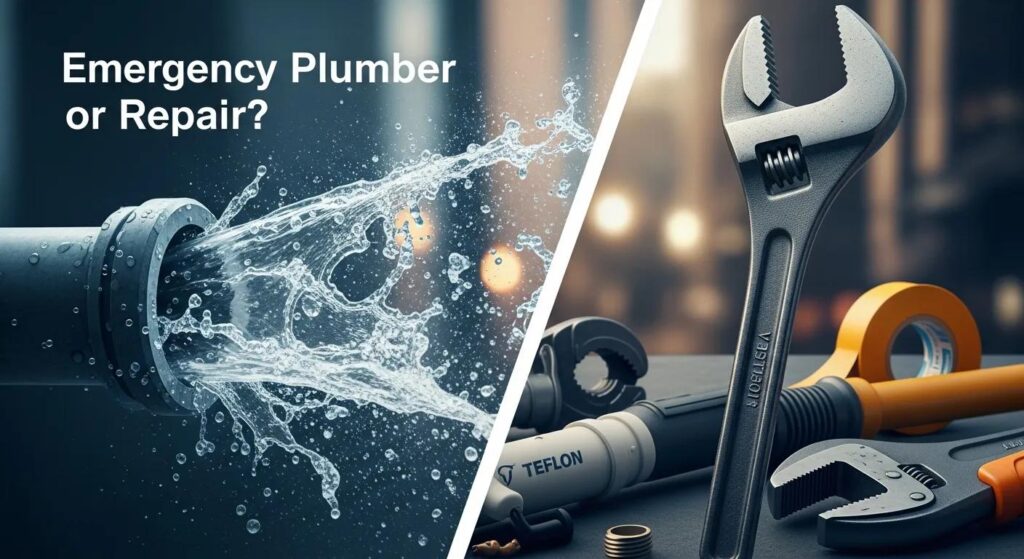
Emergency Plumber or Repair?
A plumbing emergency demands immediate action to protect your home, while a standard plumbing repair can usually wait for a scheduled visit; distinguishing between the two early prevents damage, expense, and health risks. This article explains the defining features of emergency plumbing versus routine repair, shows the common signs of urgent issues like burst pipes and sewer backups, and outlines practical steps homeowners and businesses can take right away. You will learn how response time, health hazards, and potential structural damage change the level of urgency, how preventative maintenance reduces emergency risk, and what cost drivers differ between after-hours emergencies and scheduled repairs. The guide also provides a compact decision checklist to help you decide whether to call an emergency technician or book a repair appointment, plus clear expectations about pricing transparency. Finally, the article reviews the most urgent plumbing problems, and summarizes how a local provider serving Macomb, Oakland, and Wayne counties approaches emergency response, guarantees, and transparent estimates.
What Is an Emergency Plumbing Service?
An emergency plumbing service is a rapid-response intervention for plumbing failures that pose immediate risk to property, health, or safety; it focuses on stopping damage, mitigating hazards, and restoring basic function. The mechanism of emergency response centers on prioritizing tasks that prevent water intrusion, sewage exposure, or system collapse, with crews equipped for fast mitigation and temporary repairs. The specific benefit to homeowners and businesses is reduced secondary damage — such as structural weakening, mold growth, and contamination — that escalates quickly when water or sewage remains uncontrolled. Emergency services are distinguished by availability and speed of dispatch, the ability to perform temporary stabilization (like shutoffs or bypasses), and the tools required for immediate containment. Understanding these attributes helps you decide whether an issue needs immediate professional attention or can be scheduled for normal repair timelines.
Typical emergency scenarios include major leaks, uncontrolled flooding, raw sewage backing into living spaces, or sudden total loss of water pressure, and recognizing those examples leads to concrete next steps for containment and calling a pro.
What Are the Common Signs You Need an Emergency Plumber?
Common signs of a plumbing emergency include uncontrolled flow, visible sewage, rapid pressure loss, and sudden structural-saturating leaks that continue despite homeowner shutoffs. If water is pouring from a pipe, flooding a room, or pooling beneath walls and ceilings, immediate intervention is required to prevent collapse, electrical risk, and rapid mold colonization. Sewage odor combined with backups into drains or fixtures indicates contamination risk that requires professional containment and cleanup to protect occupants’ health. Large-scale loss of hot water paired with visible leaks around heaters, or a burst main feeding the property, are also urgent because they can create both sanitation and structural crises. Recognizing these signs quickly reduces response time and limits the extent of restorative work needed later.
These emergency indicators naturally lead into the importance of continuous availability and prompt response capacity from your chosen provider.
Why Is 24/7 Availability Critical for Emergency Plumbing?
Round-the-clock availability matters because water-related damage compounds every hour it persists; immediate mitigation preserves materials and limits mold and structural issues. When a pipe bursts at night or a sewer backs up during a holiday, waiting until business hours often multiplies repair scope and cost, as moisture soaks into framing, insulation, and finishes. Rapid response teams can perform temporary measures—like isolation of mains, installation of bypasses, or emergency pumping—that stabilize the situation until a permanent repair is completed. For homeowners and property managers, 24/7 service delivers peace of mind and reduces downtime for residential operations. Understanding how delays multiply damage clarifies why emergency readiness is a central attribute for providers handling burst pipes, sewer emergencies, and other acute failures.
What Does Standard Plumbing Repair Include?
Standard plumbing repair encompasses scheduled, non-urgent work that restores or improves system function without immediate risk to health or structure; these services include fixture repairs, minor leak fixes, drain clearing, and planned installations. Typical mechanisms involve diagnostic inspection, replacement of worn components, and planned upgrades that improve efficiency and prevent future failures. The primary benefit is predictable scheduling and cost control: a planned visit allows for parts ordering, flat-fee estimates, and thorough diagnostic work to address root causes. Routine repair services reduce the frequency of emergency calls by resolving minor issues early and improving system resilience. Recognizing the boundary between routine repair and emergency response helps property owners prioritize maintenance and budget accordingly.
Scheduled repairs often tie directly into preventative programs that lower long-term disruption and expense, making the next section on specific non-emergency examples useful.
Plumbing Defects: Early Repair vs. Major Damage Costs
Most residential building owners often report problems associated with the plumbing systems. If identified at the early stages, plumbing-related defects can be easily repaired. However, if unnoticed for a long period of time, they could lead to major damages and incur a significant cost to repair.
Plumbing defects in residential buildings: analysis of anomalies and their causes, A Gurmu, 2023
Which Plumbing Issues Are Considered Non-Emergency Repairs?
Non-emergency repairs are problems that can be scheduled within days or weeks without immediate danger to occupants or structure, such as minor drips, slow drains, or fixture replacements. Examples include a faucet that leaks slowly, a toilet that runs intermittently, low-flow or partially clogged drains that still function, and installation of new fixtures or upgrades that are cosmetic or efficiency-driven. These issues typically allow for temporary homeowner measures—like placing a bucket under a steady drip or using a plunger for partial clogs—until a technician can provide a permanent solution. Scheduling these services during normal business hours enables flat-fee quoting and reduces after-hours premiums associated with emergency dispatch. Understanding which problems fit this category helps homeowners prioritize work and preserve budgets.
Routine repairs connect directly to scheduled maintenance practices that reduce the probability of emergency situations down the road.
How Does Preventative Maintenance Help Avoid Emergencies?
Preventative maintenance identifies and resolves small failures before they escalate into emergencies, using inspections, regular drain cleaning, water heater servicing, and leak detection systems to reduce surprise failures. Mechanisms include annual or biannual inspections that catch corrosion, loose fittings, or worn seals; proactive drain cleaning that prevents clogs from developing into sewer backups; and water heater flushing to remove sediment that accelerates failure. The benefit is fewer emergency responses, longer equipment life, and steadier operating costs for homeowners and businesses. Integrating smart leak detectors and routine camera inspections of sewer lines adds an early-warning layer that catches issues invisible to the naked eye. Consistent maintenance turns reactive repairs into predictable projects and significantly lowers the chance of sudden, costly emergencies.
Adopting a maintenance regimen naturally leads into how to decide whether a current issue requires immediate emergency attention or can be scheduled.
How to Determine If You Need an Emergency Plumber or a Regular Repair?
Deciding whether to call an emergency plumber or schedule a regular repair relies on assessing immediate risk, rate of deterioration, and contamination potential; a short checklist makes this decision actionable. The decision mechanism starts by asking whether the issue involves uncontrolled water, sewage exposure, electrical interaction, or rapid pressure loss—if yes, treat it as an emergency. The primary benefit of applying a quick flowchart is that it reduces hesitation and ensures timely mitigation for high-risk situations while preserving resources for non-urgent repairs. Homeowners and facility managers can use the following checklist to triage incidents effectively and take immediate containment steps where appropriate.
Use the table below to map common symptoms to urgency and recommended actions for practical, quick reference.
| Symptom | Urgency Indicator | Recommended Action |
|---|---|---|
| Uncontrolled flooding (water pouring) | High — ongoing structural/safety risk | Shut main if safe, call emergency plumbing immediately |
| Raw sewage backup or strong sewage odor | High — health hazard and contamination | Avoid exposure, stop water use, call emergency plumbing |
| Slow drain or intermittent clogging | Low — manageable short-term | Schedule standard repair; use temporary drain cleaner or plunge |
| Minor continuous drip from fixture | Low — cosmetic/efficiency issue | Schedule repair during regular hours; contain drip if needed |
| Loss of hot water without visible leak | Medium — potential heater failure | Turn off heater if leaking; schedule prompt repair or assessment |
What Key Questions Help Identify Plumbing Emergencies?
A small set of yes/no questions quickly clarifies urgency:
- Is water uncontrolled or flooding?
- Is there sewage present?
- Is there risk to electrical systems?
- Is the building without essential water or sanitation?
Each question functions as a node in a practical flowchart, and a “yes” to most indicates emergency-level priority. For example, water actively flowing from a broken pipe into living spaces or pooling around appliances is an immediate hazard that requires shutdown and emergency response. Sewage in drains, toilets, or on floors creates contamination issues that mandate professional containment and cleanup. If utility systems like hot water or pressure loss compromise building habitability for occupants, expedited professional attention is warranted. Applying these questions reduces uncertainty and speeds appropriate response.
When Should You Call Frost & Kretsch Plumbing for Professional Help?
If an assessment of the above questions indicates uncontrolled water, sewage exposure, rapid pressure loss, or immediate safety risk, call Frost & Kretsch Plumbing for professional assessment and immediate dispatch; their emergency response is available at all hours. Their 24/7 emergency offering means technicians can be mobilized outside normal business hours to stabilize situations, perform temporary mitigation, and prevent secondary damage. For non-urgent issues, you can schedule Frost & Kretsch for a planned repair visit where estimates are provided based on service needs rather than hourly billing, supporting cost predictability. Using a local, licensed and insured team reduces homeowner risk and ensures technicians who receive ongoing education manage the repair or emergency efficiently. When in doubt about severity, opting for a professional assessment is the prudent next step to protect property and health.
Choosing professional help transitions naturally into considerations of cost and what to expect from emergency versus regular repairs.
What Are the Typical Costs of Emergency Plumbing vs. Standard Repairs?
Emergency plumbing often costs more than standard repairs because of immediate mobilization, after-hours response, expedited parts, and the need to stop ongoing damage; cost drivers include time sensitivity, materials and containment work, and potential secondary-damage remediation. Standard repairs are usually scheduled with flat-fee estimates based on the service required, allowing for planned parts procurement and predictable labor allocation. The value of transparent pricing lies in knowing the basis for estimates — whether emergency or scheduled — so customers can make informed decisions. Below is a compact cost comparison table showing high-level service types, the primary cost drivers, and example ranges reflective of why emergencies typically escalate pricing.
| Service Type | Typical Cost Factors | Example Impact on Price |
|---|---|---|
| Emergency callout | After-hours response, rapid dispatch, temporary mitigation | Higher due to urgency and materials |
| Burst pipe repair | Extent of damage, access, need for excavation or structural repair | Variable; can escalate with secondary damage |
| Standard fixture repair | Parts, diagnostic time, scheduled labor | Moderate and predictable with flat-fee estimates |
| Sewer backup cleanup | Containment, sanitation, possible excavation | Higher because of health remediation needs |
How Do Emergency Plumbing Service Costs Compare to Regular Repairs?
Emergency services incur premiums when immediate action is required; factors include mobilizing technicians outside normal hours, urgent parts sourcing, pumping and containment, and added labor to stabilize structures. Regular repairs avoid many of those premiums because they are planned: technicians bring correct parts, schedule work during standard hours, and limit overtime. Secondary damage from delays — like drywall replacement or mold remediation after a flood — is a primary contributor to emergency-era cost escalation. Comparing typical scenarios clarifies expectations: a localized faucet repair is generally inexpensive and scheduled, while a burst main or sewer backup can introduce multiple cost centers. Knowing this helps homeowners weigh immediate repair versus temporary measures until a scheduled visit is possible.
What Should You Expect Regarding Transparent Pricing from Frost & Kretsch Plumbing?
Expect upfront estimates that are based on the service needs rather than billed by the hour, with clear explanations of what drives the cost and any potential additional charges related to secondary damage mitigation. Frost & Kretsch emphasizes transparent pricing so customers know the expected work scope and cost before crews proceed, which reduces surprise fees and supports better decision-making under stress. Their satisfaction guarantee aligns with transparent estimates because customers receive clarity and recourse if the work does not meet expectations. When engaging a provider for either emergency mitigation or scheduled repair, request an itemized explanation of necessary repairs versus optional upgrades to maintain control of outcomes and budgeting. This pricing transparency ties directly to the goal of limiting escalation and restoring normal operations efficiently.
The transparency policy naturally connects to the kinds of urgent issues that can justify emergency dispatch and the impacts they cause.
What Are the Most Urgent Plumbing Issues Requiring Emergency Services?
Most urgent plumbing issues include burst pipes, sewer backups, major leaks, and water heater failures that leak or threaten system safety; each condition creates rapid escalation in property damage or health risk. Burst pipes can saturate structural elements within hours, promoting mold and weakening supports, while sewer backups introduce pathogenic contamination that requires professional sanitation. Water heater failures that leak near electrical components present fire and electrocution risk if not isolated, and Water main breaks rob a building of essential water supply and can destabilize foundations if left unaddressed. Identifying these top urgencies helps homeowners prioritize immediate actions to protect occupants and limit repair scope.
Below is a concise list of urgent issues and why they require immediate attention.
- Burst Pipes: Uncontrolled flow quickly soaks structure and contents, leading to major restoration needs.
- SewerBackups: Raw sewage creates immediate health hazards and contamination that demand professional cleanup.
- Major Leaks Around Appliances or WaterHeaters: These can interact with electrical systems or saturate structural elements.
- WaterMain Breaks: Loss of essential supply and potential for ground saturation affecting foundations and landscaping.
How Do Burst Pipes and Sewer Backups Impact Your Property?
Burst pipes introduce high-volume water into building cavities, quickly damaging finishes, insulation, and structural elements and creating conditions ideal for mold growth within 24–48 hours. The mechanism of damage includes capillary migration of moisture, swelling of wood components, and weakening of drywall, which then requires staged remediation including drying, demolition, and restoration. Sewer backups carry pathogens that contaminate surfaces, require biohazard cleanup protocols, and may force temporary relocation of occupants for health reasons. The primary homeowner actions are isolating water at the main, avoiding contact with contaminated water, and calling emergency services for containment and remediation. Quick action reduces the extent of reconstruction and long-term health-related expenditures.
What Are the Signs of Water Heater Failures Needing Immediate Attention?
Signs of a failing water heater that demand urgent service include visible leaks pooling around the tank, sudden loss of hot water combined with dripping, unusual banging or rumbling noises indicating internal failure, and visible corrosion at seams. These symptoms suggest imminent rupture, internal tank failure, or sediment-induced overheating that can compromise pressure-relief mechanisms. The immediate steps are to turn off the heater’s fuel or power source and shut the water supply if safe, then request expedited professional evaluation to avoid flooding or safety hazards. Timely intervention can prevent a catastrophic tank failure and the widespread damage that would follow.
Why Choose Frost & Kretsch Plumbing for Emergency and Repair Services in Macomb, Oakland, and Wayne Counties?
Frost & Kretsch Plumbing offers comprehensive emergency and standard repair services across Macomb, Oakland, and Wayne counties with core capabilities designed to address both urgent mitigation and scheduled maintenance. Their service offerings include 24/7 emergency plumbing services, general plumbing repair services, sewer and drain cleaning, water heater installation and repair, water main and sewer line services, and excavation for complex issues; this breadth allows a single vendor to diagnose and resolve escalating problems consistently. The main customer benefits are rapid assessment and seamless job completion, licensed and insured professionals, technicians who receive ongoing education, and commitments to leave properties immaculate after work. Their unique value propositions—24/7 availability with no increased rates for after-hours, transparent pricing, and a 100% satisfaction-or-money-refunded guarantee—are designed to reduce customer risk and improve confidence when urgent decisions are needed.
Use the table below to summarize Frost & Kretsch’s stated value propositions and what each means for customers.
| Value Proposition | What It Means | Customer Benefit |
|---|---|---|
| 24/7 Emergency Service with no increased rates | Immediate dispatch any time, including weekends and holidays | Fast mitigation without surprise after-hours premiums |
| Transparent Pricing | Estimates based on service needs rather than hours | Customers know cost before work begins |
| 100% Satisfaction Guarantee | Refund policy if service does not meet expectations | Reduced financial risk and higher accountability |
| Licensed & Insured Technicians | Professionals trained and covered for liabilities | Peace of mind and quality assurance |
Comprehensive Plumbing Tasks: Installation, Maintenance, and Repair
The occupational analysis contains a brief job description, presenting for the occupation of plumbing 12 detailed task statements which specify job duties (tools, equipment, materials, objects acted upon, performance knowledge, safety considerations/hazards, decisions, cues, and errors) and learning skills (science, mathematics/number systems, and communications). The 12 task statements cover the following performance duties: installing building sewer, installing building drains and storm sewers, installing and/or maintaining drain waste and vent systems, water supply systems, installing and/or maintaining domestic hot and cold water distribution systems, installing and/or maintaining gas and/or oil systems, installing and/or maintaining hydronic heating systems, installing and/or maintaining fire protection systems, installing and/or maintaining private sewer disposal systems, setting and/or repairing fixtures and fixture trim, and repairing plumbing fixtures and/or fixture trim.
An Analysis of the Plumbing Occupation., 1974
What Comprehensive Plumbing Services Does Frost & Kretsch Offer?
Frost & Kretsch handles an array of residential and commercial plumbing needs including urgent emergency response, routine repairs, sewer and drain cleaning, water heater installation and repair, water main and sewer line services, and excavation when complex access or replacement is required. Each service follows a workflow of prompt assessment, transparent estimate, execution, and cleanup to preserve property condition and minimize disruption. For emergencies, technicians focus first on stopping damage and containing hazards, then transition to permanent repairs; for scheduled work, the emphasis is on thorough diagnostics and efficient completion. Their local focus on Macomb, Oakland, and Wayne counties ensures crews familiar with regional system characteristics and common failure modes. These service capabilities support both immediate risk reduction and long-term system reliability.
How Do Frost & Kretsch’s Guarantees and Licensing Benefit You?
Licensed and insured technicians reduce homeowner liability and increase the likelihood that repairs meet code and safety standards, while ongoing technician education keeps practices current with industry advances and effective mitigation techniques. The 100% satisfaction-or-money-refunded guarantee provides a concrete assurance that the company will address any shortcomings, making it easier for customers to choose necessary repairs and emergency response without undue financial worry. Transparent pricing policies further protect customers by clarifying what is included in an estimate and why any additional costs might arise, such as remediation for unforeseen damage. Together, licensing, guarantees, and trained technicians lower the overall risk of repairs and encourage prompt action when emergencies occur.
Frequently Asked Questions
What should I do first in a plumbing emergency?
In a plumbing emergency, the first step is to assess the situation. If there is uncontrolled water flow, immediately shut off the main water supply to prevent further damage. If sewage is involved, avoid contact and stop using water fixtures to minimize contamination risks. After securing the area, contact a professional emergency plumber for immediate assistance. Document the situation with photos if possible, as this can help the plumber understand the issue better when they arrive.
How can I prevent plumbing emergencies in my home?
Preventing plumbing emergencies involves regular maintenance and inspections. Schedule annual plumbing check-ups to identify potential issues like leaks, corrosion, or worn-out fixtures. Implement a routine of cleaning drains to prevent clogs and consider installing water leak detectors. Additionally, be mindful of what goes down your drains and avoid flushing non-biodegradable items. Keeping an eye on your water bill for sudden increases can also alert you to hidden leaks before they escalate into emergencies.
Are there any DIY measures I can take during a plumbing emergency?
While it’s best to call a professional, there are some temporary DIY measures you can take during a plumbing emergency. For minor leaks, you can use duct tape or a pipe clamp to temporarily seal the leak until a plumber arrives. If you experience a clogged drain, using a plunger can help dislodge the blockage. However, avoid using chemical drain cleaners, as they can cause further damage to your plumbing system. Always prioritize safety and call a professional for significant issues.
What are the long-term effects of ignoring plumbing issues?
Ignoring plumbing issues can lead to severe long-term consequences, including extensive water damage, mold growth, and structural damage to your home. Small leaks can gradually worsen, leading to higher water bills and potential flooding. Additionally, untreated sewer backups can pose serious health risks due to contamination. Over time, these issues can escalate into costly repairs and may even affect your home’s value. Regular maintenance and prompt attention to plumbing problems are essential to avoid these risks.
How do I choose the right emergency plumbing service?
Choosing the right emergency plumbing service involves several factors. Look for a licensed and insured provider with a good reputation in your area. Check online reviews and ask for recommendations from friends or family. Ensure they offer 24/7 service and can respond quickly to emergencies. Transparency in pricing is also crucial; a reliable service should provide clear estimates and explain any potential additional costs. Finally, consider their experience and the range of services they offer to ensure they can handle your specific needs.
What should I expect during an emergency plumbing visit?
During an emergency plumbing visit, you can expect the technician to first assess the situation and identify the source of the problem. They will likely ask questions about the issue and any previous plumbing history. After diagnosing the problem, they will explain the necessary repairs and provide an estimate. The technician will then proceed with the work, focusing on stopping any immediate damage and restoring functionality. Expect clear communication throughout the process, including updates on progress and any changes to the initial plan.
Conclusion
Understanding the distinction between emergency plumbing and standard repairs is crucial for protecting your property and health. By recognizing urgent signs and knowing when to call a professional, you can mitigate damage and ensure timely intervention. Frost & Kretsch Plumbing offers 24/7 emergency services and transparent pricing to support your needs effectively. Don’t hesitate to reach out for immediate assistance or to schedule a routine maintenance visit today.