
Pipe Repair and Leak Detection in Warren: What Homeowners Should Know
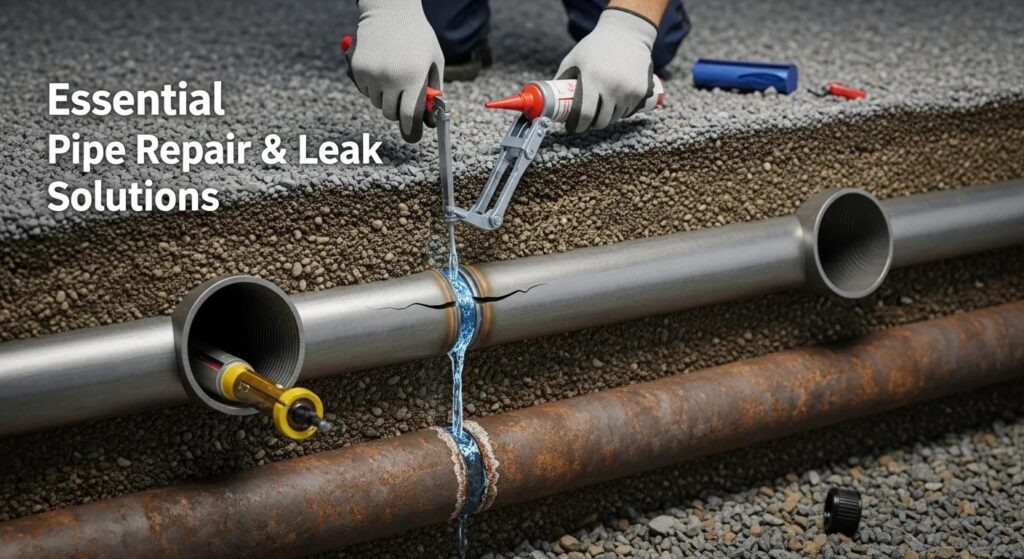
Essential Pipe Repair & Leak Solutions
Hidden leaks and damaged pipes silently threaten homes in Warren, causing higher bills, mold, and structural harm if left unaddressed. This guide explains how leak detection and pipe repair work, why modern diagnostics reduce disruption, and what homeowners should do at each stage to protect property and health. You will learn how to spot common signs of leaks, how sewer video cameras, acoustic detection, and thermal imaging differ, and when trenchless repair or full replacement is necessary. The article also walks through emergency response steps, seasonal preventative maintenance for Michigan winters, and the importance of identifying and replacing lead service lines under current regulatory attention. Practical checklists, comparison tables, and actionable steps are included so Warren homeowners can confidently diagnose issues, minimize damage, and decide when to call a licensed professional. Throughout, keywords such as pipe repair in Warren, leak detection in Warren, sewer camera inspection Warren, and lead pipe replacement Warren are used naturally to match local search intent and help homeowners find relevant solutions.
What Are the Common Signs of Water Leaks in Warren Homes?
Leaks often present as unexplained increases in water usage, visible moisture, or unusual sounds because escaping water alters usage patterns, creates damp conditions, and produces audible flow where none should exist. A high water bill signals abnormal consumption caused by hidden supply-line leaks or continuous flow from a fixture; catching this early reduces waste and prevents secondary damage. Detecting leaks early preserves structural elements and helps avoid mold growth that escalates repair scope. Recognizing these signs lets homeowners take targeted actions—basic diagnostics, containment, and when necessary, scheduling a professional inspection to confirm and locate the source.
Homeowners can use simple checks to confirm a suspected leak, such as monitoring the water meter while all fixtures are off and listening for running sounds near walls or floors. These quick actions isolate whether an issue is within the plumbing system or related to appliances. If a meter test shows continuous flow or you notice damp patches without an obvious source, a diagnostic visit is usually the next practical step. Early detection minimizes repair complexity and can make trenchless options viable.
Common visual and behavioral signs of leaks include stains, peeling paint, or recurring damp spots that don’t dry, which often indicate persistent moisture intrusion. These signs tend to worsen over time and can migrate as water follows framing, insulation, or slab voids. Addressing visible indicators promptly reduces mold risk and prevents costly structural repair later. Understanding the difference between a surface issue and a systemic leak helps prioritize emergency versus scheduled service.
Homeowners who notice any of these signs should consider a diagnostic appointment to confirm the source and scope; prompt action saves money and limits property damage. Frost & Kretsch Plumbing provides transparent estimates and 24/7 availability for urgent situations, offering licensed technicians and a quoted price guarantee to help homeowners plan repairs with confidence. This combination of immediate access and clear pricing makes it easier to move from detection to repair with minimal uncertainty.
How Can Hidden Water Leaks Affect Your Home and Water Bills?
Hidden leaks increase water consumption and utility bills because pressurized supply lines or slow slab leaks continuously feed water into the structure without visible runoff. The mechanism is simple: a hairline crack or failed joint allows constant flow that shows up as incremental usage on the meter, often unnoticed until a monthly bill spikes. Beyond cost, ongoing leaks saturate framing, insulation, and slabs, which degrades materials and raises the likelihood of mold. Over time that moisture can compromise structural elements and increase insurance claims complexity, so timely diagnosis is both an economic and a health-preserving action.
An example scenario illustrates the impact: a slow slab leak under a laundry area can add hundreds of gallons per month to consumption and produce musty odors and foundation moisture that accelerate deterioration. Detecting such leaks early reduces replacement scope by avoiding widespread excavation and limiting mold remediation. Insurers may view prolonged neglect unfavorably, so documenting prompt professional response helps support claims. Understanding these downstream effects encourages proactive inspection when small signs first appear.
What Visible Signs Indicate Plumbing Leaks in Residential Properties?
Visible signs that point to plumbing leaks include ceiling stains, bubbling or peeling paint, warped flooring, and persistent puddling near fixtures, because these symptoms result from ongoing moisture migration. Fixtures with corroded bases or damp cabinets commonly indicate supply-line issues behind walls or under sinks, while slow-draining fixtures can signal a sewer or drain problem. Homeowners should treat recurring stains and warped materials as indicators requiring inspection rather than cosmetic fixes. Taking photos and noting when signs first appeared helps a technician narrow diagnostic steps and compare pre- and post-repair conditions.
Simple DIY checks—pressing on suspect drywall, sniffing for musty odors, and isolating fixtures while observing the meter—can confirm whether a visible symptom corresponds to active leakage. If the meter continues to register flow with all valves off, that points to a hidden leak requiring professional detection tools. Acting early avoids escalation from a localized repair to full-scale replacement, preserving finishes and landscape. The next section explains the technology professionals use to find leaks precisely and limit disruption.
- Common warning signs homeowners should watch for:
- Unexplained high water bills: Persistent elevated usage with no behavioral change.
- Damp spots or stains: Ceiling or wall discoloration that spreads over time.
- Audible water sounds: Hissing or running when no fixtures are in use.
This checklist helps prioritize when to escalate from DIY checks to scheduling a professional diagnostic visit. Prompt documentation and early containment reduce repair scope and potential mold-related health risks.
How Does Advanced Leak Detection Technology Improve Accuracy and Minimize Damage?
Advanced leak detection tools increase diagnostic accuracy by directly locating defects without broad excavation, using sound, visual, or thermal signatures to reveal where water is escaping and why. These methods work by detecting physical cues—video inspection visualizes the pipe interior, acoustic devices pick up flow noises through materials, and thermal imaging reveals temperature anomalies caused by moisture. The benefit is clear: precise pinpointing reduces unnecessary digging, shortens repair timelines, and enables targeted trenchless or sectional repairs instead of full replacements. Using the right method for the situation minimizes property disruption and yields more reliable repair scopes and quotes.
Below is a concise comparison that highlights when each method is most appropriate and their practical trade-offs.
| Detection Method | Primary Attribute | Typical Use-Case |
|---|---|---|
| Sewer video camera inspection | Visual confirmation of interior defects | Locating sewer line blockages, fractures, root intrusion |
| Acoustic leak detection | Sound-based pinpointing of pressurized supply leaks | Pinpointing hidden supply-line leaks under slabs or behind walls |
| Thermal imaging | Temperature contrast mapping of wet areas | Detecting cold/wet zones from slow leaks, especially in floors or ceilings |
This EAV-style table clarifies differences so homeowners can discuss options knowledgeably with a technician. Choosing the appropriate method reduces guesswork and often preserves finishes and landscaping.
What Are the Benefits of Sewer Video Camera Inspection for Leak Detection?
Sewer video camera inspection provides direct visualization of the pipe interior, allowing technicians to identify cracks, offsets, root intrusion, and chronic corrosion with precise location markers. The mechanism uses a flexible camera pushed into the line with recorded footage that defines defect type and exact depth from an access point. The main benefit is enabling targeted repairs—once a defect is visually confirmed, trenchless relining or sectional replacement can be planned accurately, avoiding exploratory excavation. This clarity produces faster, more accurate quotes and reduces the risk of surprise costs during repair.
Camera inspection is especially valuable for long sewer runs or when external symptoms point to underground issues but the surface location is unclear. Visual records also support insurance claims and help prioritize repairs by severity. Selecting a provider that uses camera inspection increases the likelihood of choosing the least disruptive repair method.
How Do Acoustic and Thermal Imaging Leak Detection Methods Work?
Acoustic detection finds leaks by amplifying and triangulating the sound of escaping water within pressurized lines; sensors translate mechanical noise into a pinpointed location without opening walls. Technicians interpret frequency patterns and material transmission characteristics to determine if the leak is on the supply side or a related fixture. Thermal imaging detects temperature anomalies caused by moisture—wet areas often show different heat retention that a thermal camera reveals, especially for hot-water lines or saturated areas. Both approaches are non-invasive and complement camera inspection by narrowing search zones and reducing excavation.
Combined workflows typically use meter or acoustic screening to find a likely zone, thermal imaging to map wet areas, and a targeted camera run to confirm internal defects. This layered strategy yields the most accurate diagnosis with the least property disruption. Homeowners who prioritize minimal repair footprint should look for providers that offer these technologies and integrated diagnostic workflows.
What Types of Pipe Damage Require Repair in Warren Homes and Businesses?
Pipe damage in Warren includes burst pipes, frozen lines, corroded or galvanized supply pipes, tree-root intrusion in sewer lines, and slab leaks—each with distinct causes and repair approaches. Burst pipes typically result from freezing or pressure surges and demand immediate isolation and repair, while corrosion develops over time and often requires section replacement. Tree roots exploit joints and offsets in sewer lines, generally necessitating excavation or trenchless replacement depending on severity. Slab leaks under concrete need precise location and can sometimes be repaired with spot repairs or relining rather than full slab removal. Identifying the damage type guides the choice between temporary mitigation, sectional replacement, trenchless relining, or full excavation.
Understanding repair urgency and likely disruption helps homeowners plan. Low-disruption solutions like trenchless relining are preferable when diagnostics confirm suitability, but some scenarios still require excavation for complete replacement. A diagnostic-first approach clarifies the least invasive path forward and establishes a transparent cost estimate.
| Damage Type | Typical Repair Method | Urgency & Disruption |
|---|---|---|
| Burst pipe | Isolate, temporary bypass, sectional replacement | High urgency; moderate disruption |
| Frozen pipe | Safe thawing, inspect for fractures, repair/replace | Immediate action; low-to-moderate disruption |
| Corroded pipe | Sectional or whole-run replacement | Moderate urgency; moderate disruption |
| Tree-root intrusion | Root removal, sectional replace or trenchless replacement | Moderate urgency; variable disruption |
| Slab leak | Pinpoint location, spot repair or relining | Moderate-high urgency; potential high disruption if not contained |
This EAV table helps prioritize repairs based on safety and long-term reliability rather than short-term fixes. Proper diagnostics reduce the chance of recurring failures and unexpected excavation.
How Are Burst, Frozen, and Corroded Pipes Repaired?
Repair workflows follow a consistent pattern: diagnose the failure mode, isolate the affected section to stop further damage, choose the appropriate repair (thaw and patch, sectional replace, or full replacement), and then test the system for integrity. For burst pipes the immediate priority is shutting off water and implementing a temporary bypass to protect the home; permanent repair follows with replacement of the failed section and pressure testing. Frozen pipes require controlled thawing to avoid thermal shock and subsequent inspection for micro-fractures; technicians may replace compromised segments to ensure long-term reliability. Corroded pipes are assessed for remaining life; often, replacing the affected run prevents repeated failures and addresses water quality concerns.
When Is Trenchless Repair Preferred Over Traditional Excavation?
Trenchless repair becomes the preferred choice when pipe condition and access allow relining or pipe bursting, because these methods preserve landscaping, reduce restoration costs, and shorten project timelines. Relining inserts a cured-in-place pipe material that seals defects internally and is ideal for continuous sewer runs with limited structural collapse. Pipe bursting replaces an old pipe in place with a new one while minimizing surface excavation. However, trenchless approaches are unsuitable when pipes have collapsed extensively, multiple complex lateral connections, or severe offsets that prevent lining. Diagnostics—especially camera inspection—determine trenchless feasibility and prevent inappropriate selection of minimally invasive fixes for unsuitable conditions.
- Factors that favor trenchless over excavation:
- Continuous piperuns with accessible entry points: Easier lining and bursting application.
- Limited lateral connections: Simplifies lining without complex reconnections.
- Desire to preserve landscaping and hardscape: Reduces restoration costs and timeline.
These criteria help homeowners evaluate repair proposals and understand when a trenchless option is realistic and beneficial.
What Emergency Pipe Repair Services Are Available in Warren for Urgent Plumbing Issues?
Emergency pipe repair services provide rapid-response triage to stop active water loss, limit damage, and arrange temporary mitigation followed by permanent repair to restore system integrity. The workflow begins with dispatching a licensed technician to isolate water, assess structural risk, and apply temporary fixes such as bypasses or emergency couplings. After stabilization, technicians recommend definitive repair options—ranging from sectional replacement to trenchless relining—based on diagnostics. Transparent pricing practices and clear communication during emergency calls help homeowners make informed decisions under pressure and reduce the risk of surprise charges or incomplete repairs.
Immediate homeowner actions complement professional response: shut off the main, protect electrical circuits in wet areas, and move valuables from affected zones while the crew mitigates damage. Emergency teams document conditions and provide an upfront estimate for permanent repairs so homeowners understand next steps and costs. Rapid mitigation, followed by targeted diagnostic work, minimizes long-term repair scope and related restoration expenses.
If you face an urgent pipe failure, contact Frost & Kretsch Plumbing for emergency response; the company offers 24/7 emergency service, licensed technicians, and transparent pricing with a quoted price guarantee to help homeowners act quickly and confidently. Their workflow emphasizes rapid mitigation, clear cost communication, and follow-through to permanent repair to limit damage and restore service.
How Does 24/7 Emergency Pipe Burst Repair Work?
A 24/7 emergency pipe burst response follows a clear timeline: the call is taken and dispatched, a technician arrives to assess and isolate the leak, temporary measures are applied to control damage, and a plan for permanent repair is proposed. During assessment, technicians check structural risk and recommend immediate containment like shutting valves or installing temporary couplings to restore partial service. After stabilization, they perform diagnostic tests—often camera or acoustic methods—to define the permanent repair scope and provide a transparent quote. Follow-up includes permanent repair, pressure testing, and cleanup to return the property to serviceable condition.
This structured approach turns a chaotic event into a sequence of controlled steps, reducing the chance of secondary damage such as mold or electrical hazards. Knowing the sequence helps homeowners prioritize safety and documents actions for insurance purposes. The next subsection explains what homeowners should do while waiting for professional help.
What Should Homeowners Do During a Plumbing Emergency?
During a plumbing emergency homeowners should follow an ordered checklist to reduce harm: shut off the water supply, cut power in wet areas if safe, move valuables and furniture away from affected spots, and contain water with towels or containers while awaiting professionals. These steps reduce immediate damage and protect occupants from electrical hazards or slip risks. Photographing the scene and noting times of events supports insurance claims and helps technicians understand the evolution of the failure. Once professionals arrive, provide access points and any relevant history of recent plumbing work to speed diagnostics and repair planning.
- Immediate homeowner steps: Turn off the main water valve to stop flow.Cut electricity in affected areas if there is a risk of contact.Move valuables and contain water with towels and buckets.Call emergency plumbing for immediate dispatch and instructions.
This numbered checklist provides a simple sequence that reduces damage and prepares the property for arriving technicians.
How Can Preventative Maintenance Help Avoid Costly Pipe Repairs and Leaks?
Preventative maintenance reduces the frequency and severity of pipe failures by catching small problems early and adapting systems to seasonal stresses common in Michigan, such as freeze-thaw cycles. Regular inspections identify corrosion, early leaks, and vulnerable connections before they become emergencies. Routine maintenance also includes cleaning drains, monitoring water meter behavior, and installing simple smart leak detectors that alert homeowners to abnormal flow. These proactive steps extend pipe life, reduce unexpected repair costs, and support a predictable maintenance budget.
A maintenance plan typically includes annual inspection, prompt repair of minor corrosion, winterization measures, and targeted diagnostics when unusual symptoms appear. For higher-risk properties—older homes or those with prior leaks—inspections should be more frequent. Documenting maintenance actions and diagnostic results makes it easier to plan long-term replacement and validate insurance claims.
What Are Effective Tips for Winterizing Pipes in Michigan?
Winterizing focuses on preventing freezing and pressure damage by insulating exposed pipes, sealing drafty crawlspaces, and disconnecting and draining outdoor hoses and irrigation lines. Heat tape or pipe insulation on vulnerable supply lines reduces freeze risk, while opening cabinet doors under sinks keeps warmer air circulating around plumbing fixtures during deep cold. Keeping a controlled, low flow through vulnerable lines during extreme cold can prevent freezing when applied selectively and safely. When winterizing seems complex or persistent freezing occurs, schedule a professional winterization service to ensure consistent protection.
- Practical winterizing checklist: Insulate exposed pipes and install heat tape where needed.Seal crawlspace and rim-joist drafts to stabilize indoor temperatures.Drain and disconnect outdoor hoses; winterize irrigation systems.
These measures together lower the likelihood of freeze-related failures and the need for emergency repairs.
How Often Should Homeowners Schedule Plumbing Inspections?
Most homeowners benefit from an annual plumbing inspection to catch wear, corrosion, and small leaks before they escalate, while older homes or properties with known vulnerabilities should consider semi-annual checks. Inspections typically cover supply and drain lines, visible fittings, water heater connections, and sewer line condition when warranted. A proactive inspection includes meter checks, pressure tests, and targeted camera inspection for lines with prior issues. Establishing a routine cadence reduces surprise repairs, supports replacement planning, and often lowers life-cycle costs for plumbing infrastructure.
Adapting inspection frequency to property age and use patterns ensures resources are focused where risk is highest. Annual documentation of findings makes future repairs more efficient and helps maintain property value.
Why Is Lead Pipe Replacement Important for Warren Homeowners and How Is It Done?
Lead service line replacement is important because lead in drinking water poses serious health risks, particularly to children and pregnant women, and regulatory focus has increased replacement expectations and funding pathways. The mechanism of harm is well established: lead leaches into drinking water from aging service lines and plumbing materials, especially when corrosion control is insufficient. Replacing lead service lines eliminates the source, reduces exposure risk, and aligns homes with evolving public health guidance and regulatory actions. A clear inspection and replacement process protects household health and simplifies long-term water quality management.
Replacement is a multi-step process starting with inspection to confirm lead presence, mapping the portion of line ownership, planning replacement scope, and executing either full or partial service line replacement as allowed by local rules. Post-replacement flushing and documentation complete the workflow and provide homeowners with records for future sale or compliance purposes.
| Inspection Phase | Health/Regulatory Attribute | Typical Timeline/Notes |
|---|---|---|
| Visual & material identification | Confirms lead presence or susceptibility | Short inspection visit; sample or tag-based verification |
| Scope & estimate | Transparent replacement options and quote | Clear pricing and scheduling; homeowner decision point |
| Replacement execution | Removes lead source; hands-on construction | Variable timeline depending on length and access |
| Post-replacement testing | Verifies reduced lead levels and documents work | Flushing and sample verification; homeowner receives documentation |
This EAV table clarifies steps so homeowners understand inspection, replacement, and verification stages before work begins. Clear documentation supports compliance and peace of mind.
What Health Risks Are Associated with Lead in Drinking Water?
Lead exposure in drinking water is linked to neurological and developmental harm in children, reduced cognitive function, and increased health risks in vulnerable adults, because lead interferes with biological processes at low exposure levels. The greatest risks are to fetuses, infants, and young children, where developmental impacts can be long-lasting. For adults, chronic exposure can contribute to cardiovascular and renal concerns. Testing and replacement remove the primary household source and significantly reduce exposure risk, making inspection and remediation a public-health priority for affected homes.
Understanding these risks motivates homeowners to prioritize inspection and replacement where potential is identified. Regulatory trends emphasize removal of lead service lines, so proactive homeowner action aligns with current public health objectives.
How Does Frost & Kretsch Plumbing Handle Lead Pipe Inspection and Replacement?
Frost & Kretsch Plumbing approaches lead service line work with a clear inspection-to-replacement workflow: confirm material and scope, provide a transparent written estimate, schedule licensed technicians for replacement, and complete post-replacement flushing and documentation. The company emphasizes licensed and insured personnel, upfront quoted pricing, and a satisfaction guarantee that reassures homeowners about workmanship and outcomes. Their process is designed to minimize disruption while ensuring safety and compliance, and technicians coordinate necessary tests and documentation after replacement to verify results. Homeowners receive clear communication throughout, from inspection findings to completion paperwork.
Homeowners concerned about lead should schedule a consultation to determine whether their service line requires replacement; Frost & Kretsch Plumbing offers inspection and replacement planning to help comply with evolving regulatory expectations and protect household health. This service combines technical capability with transparent pricing and documented results to guide informed decisions.
- If you suspect a lead service line or want an inspection or replacement consultation, contact Frost & Kretsch Plumbing at (586) 675-0097 to arrange an assessment and estimate. Licensed technicians, transparent pricing with a quoted price guarantee, 24/7 availability for urgent situations, use of advanced diagnostics like sewer video camera inspection, and a customer satisfaction policy (“You will be 100 percent satisfied or your money will be refunded.”) support careful, accountable lead-line work.
This final call-to-action connects regulatory concern, health protection, and practical replacement capability for Warren homeowners facing lead-service-line questions.
Frequently Asked Questions
What preventative measures can homeowners take to avoid pipe leaks?
Homeowners can implement several preventative measures to minimize the risk of pipe leaks. Regular inspections of plumbing systems can help identify early signs of wear or corrosion. Insulating exposed pipes, especially in colder months, can prevent freezing and subsequent bursting. Additionally, monitoring water usage and being vigilant about unusual changes in water bills can help catch leaks early. Installing smart leak detection devices can also provide real-time alerts, allowing for prompt action before significant damage occurs.
How can homeowners prepare for a plumbing emergency?
Preparation for a plumbing emergency involves having a clear action plan. Homeowners should know the location of the main water shut-off valve and how to operate it. Keeping emergency contact information for a reliable plumber handy is essential. Additionally, having basic tools, such as a wrench and towels, can help manage minor leaks until professional help arrives. Regularly reviewing and practicing emergency procedures can also ensure that everyone in the household knows what to do in case of a plumbing crisis.
What are the long-term benefits of regular plumbing maintenance?
Regular plumbing maintenance offers numerous long-term benefits, including the prevention of costly repairs and extended lifespan of plumbing systems. By identifying and addressing minor issues before they escalate, homeowners can save money on emergency repairs and reduce the risk of water damage. Routine maintenance also helps maintain water quality and efficiency, leading to lower utility bills. Furthermore, a well-maintained plumbing system can enhance property value and provide peace of mind, knowing that the infrastructure is in good condition.
What should homeowners do if they suspect a lead pipe in their home?
If homeowners suspect they have lead pipes, they should take immediate action to confirm their presence. This involves scheduling a professional inspection to assess the plumbing materials. If lead is confirmed, homeowners should prioritize replacement to mitigate health risks associated with lead exposure. It’s also advisable to avoid using hot water from suspected lead pipes for cooking or drinking until the issue is resolved. Consulting with licensed professionals can provide guidance on the best replacement options and compliance with local regulations.
How can seasonal changes affect plumbing systems?
Seasonal changes can significantly impact plumbing systems, particularly in regions with extreme temperatures. In winter, freezing temperatures can cause pipes to expand and burst if not properly insulated. Conversely, summer heat can lead to increased water usage and potential strain on plumbing systems. Homeowners should adjust their maintenance routines accordingly, such as winterizing pipes before cold weather and checking for leaks during warmer months. Regular inspections can help identify vulnerabilities that may be exacerbated by seasonal changes.
What are the signs that a plumbing system needs immediate attention?
Signs that a plumbing system requires immediate attention include persistent leaks, unexplained increases in water bills, and visible water damage such as stains or mold growth. Additionally, unusual sounds like gurgling or hissing from pipes can indicate underlying issues. If fixtures are draining slowly or there are frequent clogs, these may also signal a need for professional evaluation. Homeowners should not ignore these signs, as timely intervention can prevent more extensive damage and costly repairs.
Conclusion
Addressing pipe repairs and leak detection is crucial for Warren homeowners to prevent costly damage and health risks. Utilizing advanced diagnostic technologies ensures accurate identification of issues, allowing for targeted and efficient repairs. By prioritizing regular maintenance and prompt action, homeowners can safeguard their properties and maintain water quality. For expert assistance and transparent pricing, contact Frost & Kretsch Plumbing today.